
- Home
- Support for obtaining research funding
- Challenging Research Award
Challenging Research Award
- Home
- Support for obtaining research funding
- Challenging Research Award
Challenging Research Award
English Name : Science Tokyo Challenging Research Award
Overview
To encourage young faculty members at Science Tokyo to engage in challenging research, Science Tokyo has established the Challenging Research Award for creative, up-and-coming researchers who boldly pursue the promotion of the most advanced research in the world, pioneering of new fields of study, innovative development of new research, and important issues that are difficult to solve. We commend the recipients of this award and provide them with financial support for their research. Many of the researchers who won this award have also gone on to win the Commendation for Science and Technology by the Minister of Education, Culture, Sports, Science and Technology. In 2026, 8 researchers were selected and 3 of them won the Suematsu Challenging Research Award.
Throughout the selection, Research Development Center make sure the present research trends by the early career researchers and keep setting many opportunities to support them.
FY2026 Requirements for Recommendation
*Only in Japanese.
*This award is only available to recommended individuals.
*Screening for FY2026 has been completed.
FY2026 Award Winners
The 25th Science Tokyo Challenging Research Awards went to eight researchers each of whom will receive a research grant. Three of the awardees were also selected for the Suematsu Challenging Research Awards for outstanding research.
| Name | Affiliation | Title | Research topic(★:the Suematsu Challenging Research Award) |
|---|---|---|---|
| Kim Byunggi | Department of Mechanical Engineering, School of Engineering |
Associate Professor | Exploring quantum transduction mechanisms in a triply resonant microwave–hypersonic phonon–optical system |
| Akira Takahashi | Department of Chemical Science and Engineering, School of Materials and Chemical Technology |
Assistant Professor | Creation and Sustainable Design of Organic Polymers Exhibiting Hydraulicity |
| Yuichi Mitsui | Department of Immunology, Graduate School of Medical and Dental Sciences |
Assistant Professor | Elucidating the Mechanisms Underlying Susceptibility to Type 2 Diabetes Mediated by Disease-Specific Readthrough Transcripts |
| Yusuke Matsuyama | Department of Dental Public Health, Graduate School of Medical and Dental Sciences |
Associate Professor | Heterogeneous Effects of Oral Function: A Causal Machine Learning Approach |
| Yuto Honda | Laboratory for Chemistry and Life Science, Institute of Integrated Research |
Assistant Professor | ★A Novel Approach for the Degradation of Intracellular Undruggable Target Proteins Using Antibody-loaded Nanoparticles |
| Kazuya Kanemoto | Institute of Biomaterials and Bioengineering, Institute of Integrated Research |
Associate Professor | ★Multicomponent Cycloaddition for Site-Selective Peptide Functionalization |
| Sayaka Deguchi | Medical Research Institute, Institute of Integrated Research |
Junior Associate Professor | Regulation of Fluid Shear Stress–Induced Dedifferentiation in Human Hepatocytes |
| Daichi Fujiki | AI Computing Research Unit, Institute of Integrated Research |
Associate Professor | ★Efficient Physical AI Edge Architecture via Memory-Computation Integration |
Comments from the Suematsu Challenging Research Award winners
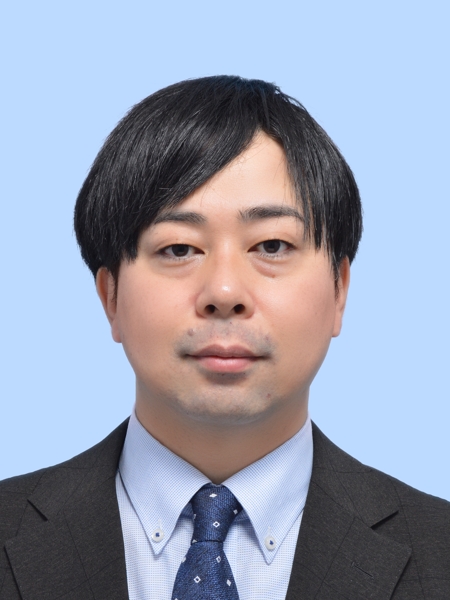
<Associate prof. KANEMOTO>
Laboratory for Biomaterials and Bioengineering, Institute of Integrated Research
I am deeply honored to receive the prestigious Science Tokyo Challenging Research Award and the Suematsu Special Award. I would like to express my sincere gratitude to the professors and researchers who have provided valuable advice and inspiration throughout my research career, as well as to the students who have been involved in this research.
Peptides and proteins are important classes of molecules that not only play essential roles in biological functions but also serve as fundamental platforms for pharmaceuticals and biomaterials. However, because they contain many reactive sites, it remains difficult to precisely introduce multiple functions at desired positions. My research has focused on the development of organic synthetic reactions that enable the introduction of multiple molecules at specific sites, such as the N-terminus of peptides. In this project, as a new challenge, I aim to develop a method that uses reactive sites generated from peptide-derived functional groups, including the N-terminus, C-terminus, and amino acid side chains, to connect three components at a single defined site through a three-component ligation reaction. By expanding this method from small molecules to peptides, proteins, and antibodies, I hope to develop it into a highly versatile molecular ligation technology that will contribute to drug discovery, diagnostics, and biomaterials research.
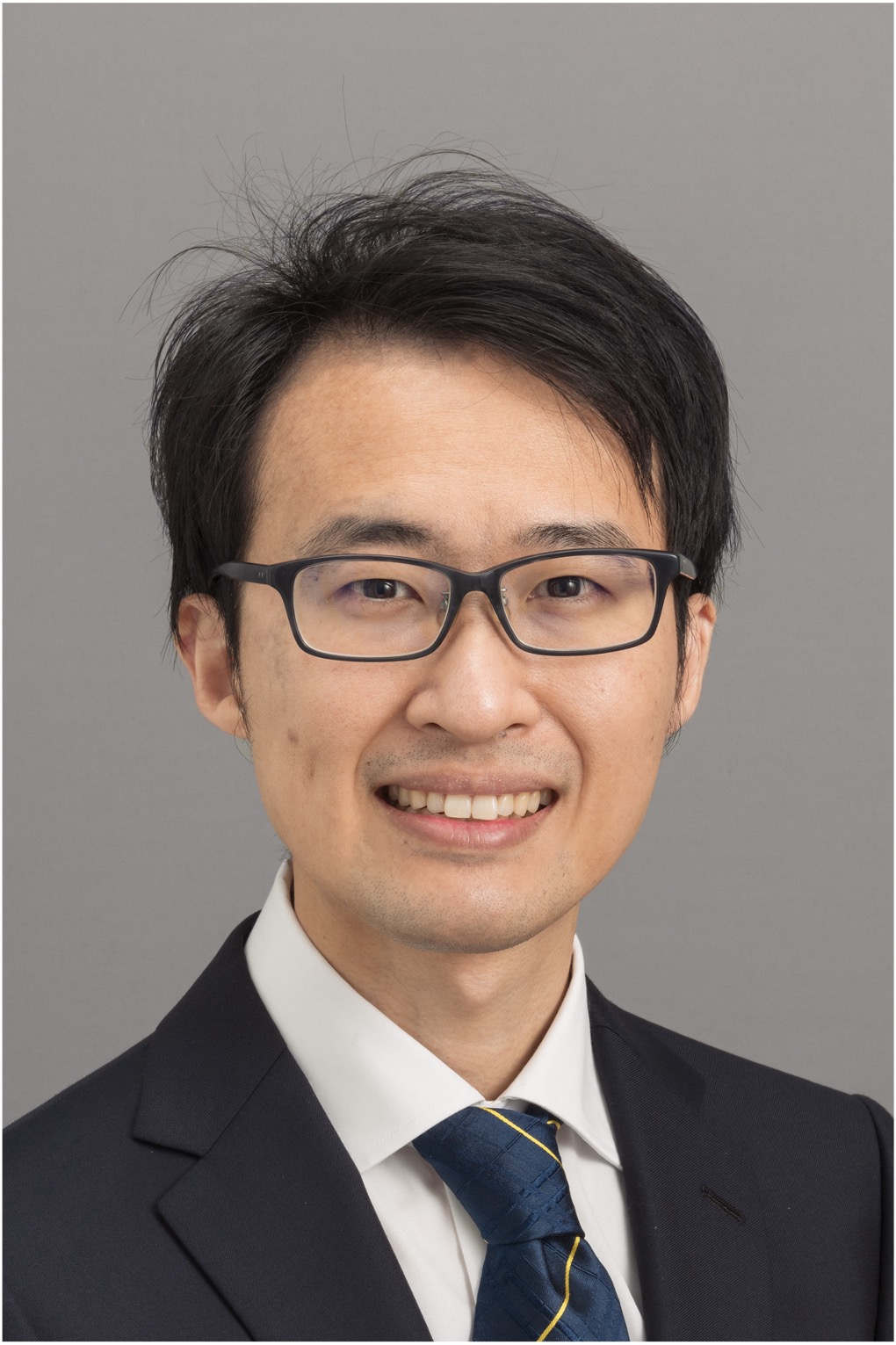
<Associate prof. FUJIKI>
AI Computing Research Unit, Institute of Integrated Research
I am deeply honored to receive the prestigious Science Tokyo Challenging Research Award and the Suematsu Special Award. I would like to take this opportunity to express my sincere gratitude to Professor Masato Motomura of the AI Computing Research Unit, to all the faculty members who have provided me with invaluable guidance and support, and to the students who have worked with me on our research.
Large-scale AI models have expanded beyond language and image processing, increasingly evolving into physical AI that enables robots and mobility systems to act autonomously in the real world. Realizing such intelligence embedded in the physical world requires highly efficient computing platforms capable of continuously running sophisticated AI workloads under strict power and computational resource constraints. In this research, building on our work in memory-centric computing that improves the efficiency of memory-bandwidth-bound AI workloads, we develop a new AI computing platform for edge environments by integrating the “compute-centric intelligence” and “memory-centric intelligence” inherent in physical AI. Looking ahead, I hope this work will contribute to the realization of a society in which robots and mobility systems work flexibly and autonomously in collaboration with humans.
Award Ceremony
The Award Ceremony will be held on October 1th, 2026.
<Assistant prof. HONDA>
Laboratory for Chemistry and Life Science, Institute of Integrated Research
I am deeply honored to receive the prestigious Institute of Science Tokyo Exploratory Research Award and the Suematsu Special Award. I would like to take this opportunity to express my heartfelt gratitude to Professor Nobuhiro Nishiyama (Laboratory for Chemistry and Life Science, Institute of Innovative Research), as well as to all the professors who have guided me, my collaborators and the dedicated students who have conduct the research journey with me.
Many therapeutic targets for intractable diseases, such as cancer, reside inside cells. Consequently, targeted degradation of these intracellular molecules has emerged as a highly promising approach for developing novel therapies. Although drug modalities inducing protein degradation have been widely studied in recent years, they remain difficult to apply to targets with smooth surfaces that lack distinct binding pockets. Despite their high therapeutic potential, these have long been considered “undruggable” and excluded from traditional drug discovery.
To address this challenge, my research has focused on developing drug delivery systems (DDS) that utilize nanoparticles combining polyphenols and polymers to deliver various biopharmaceuticals into target cells. In this award-winning project, by integrating this unique DDS technology with antibodies, we aim to induce the degradation of these challenging intracellular targets, thereby driving a major breakthrough in next-generation drug discovery.