
Report
Interdisciplinary Research Matching Event: “Science Crosspoint 2025‐Expanding the Future of Research from Here” Held
2026.03.12
On October 9, 2025, the Research Development Centre, Science Tokyo hosted a convergence science matching event, Science Crosspoint 2025 — Expanding the Future of Research from Here.
The event aimed to create networking opportunities among researchers within the institute, allowing them to learn about each other’s work and explore new perspectives and possibilities for collaboration. Rather than focusing on any single discipline, the event targeted early-career researchers and doctoral students, encouraging free-form interdisciplinary projects by teams formed across departmental and graduate-school boundaries.
At the opening, Vice President and Director of the Research Development Center, Kei Sakaguchi, and Executive Vice President Tetsushi Furukawa spoke about cross-disciplinary research initiatives, including the Visionary Initiatives (VIs) and other research support activities conducted by the Research Development Center.
The venue displayed 38 research introduction posters: 32 presenters and six teams who were awarded in the second round of the 2023 Matching Fund. Presenters first gave one-minute lightning talks to introduce their research to all attendees, followed by poster sessions where lively, concrete discussions took place with a view toward forming matches for collaboration.
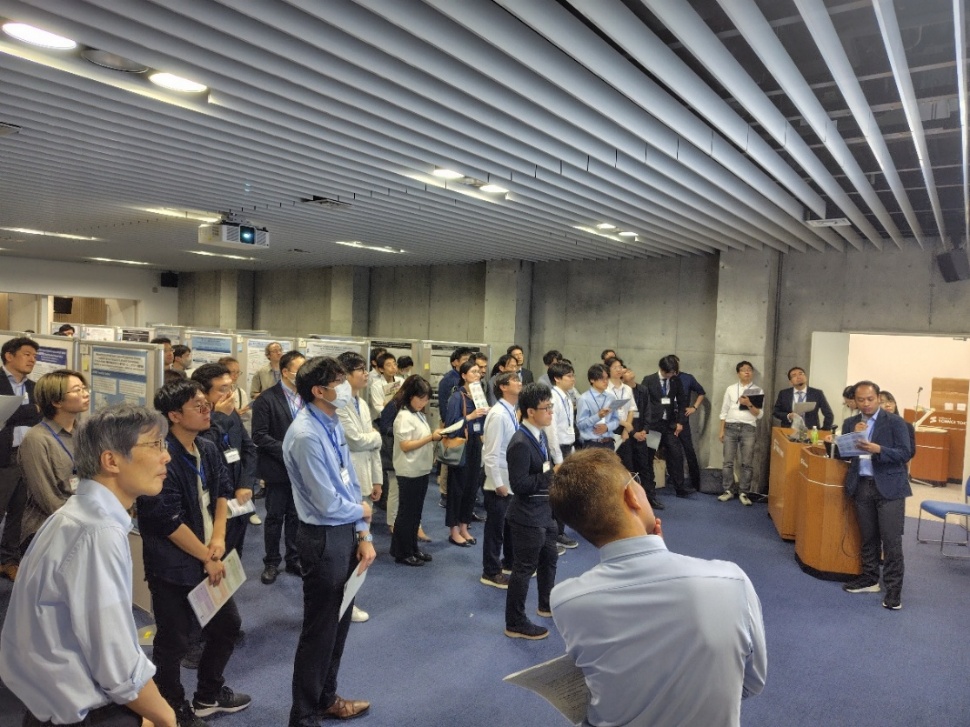
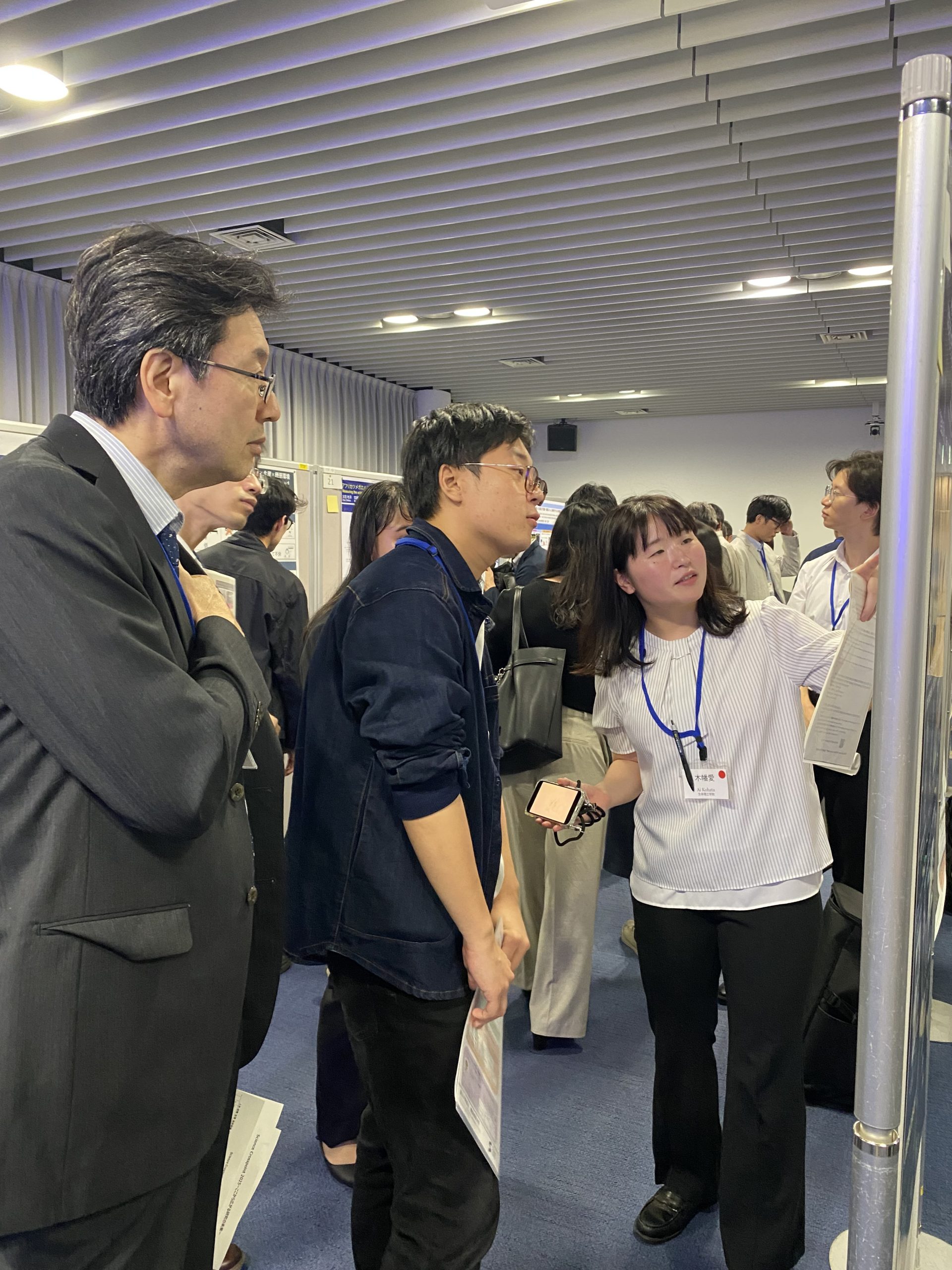
One of the Matching Fund awardees, lecturer Keiichi Akahoshi from Department of Hepato-Pancreato-Biliary Surgery, Graduate School of Medical and Dental Sciences presented the pathway to achieving outcomes for his project, “Visualization and Quantification of Healthcare Workers’ Workstyles toward Effective Workstyle Reform.”
“Starting from an online matching event, the idea to visualize and quantify healthcare workers’ workstyles emerged through collaboration with associate professor Takuya Oki from the School of Environment and Society, combining beacon data analysis techniques. This led to an application for the Matching Fund. At the outset of the interdisciplinary collaboration, differences in literacy were challenging, but we realized the importance of gathering colleagues genuinely committed to the same issue and of mutual willingness to engage with each other’s differing backgrounds.”
At the venue, booths introduced research support services in Science Tokyo. Multiple support organizations showcased a wide range of offerings—from platforms for researchers exploring interdisciplinary collaboration to support aimed at further social implementation. About 20 university research administrators (URAs) from various centers participated, helping to build new connections that foster interdisciplinary research on the spot and creating an approachable atmosphere for consultation. Many attendees who became aware of URA roles for the first time posed active questions.
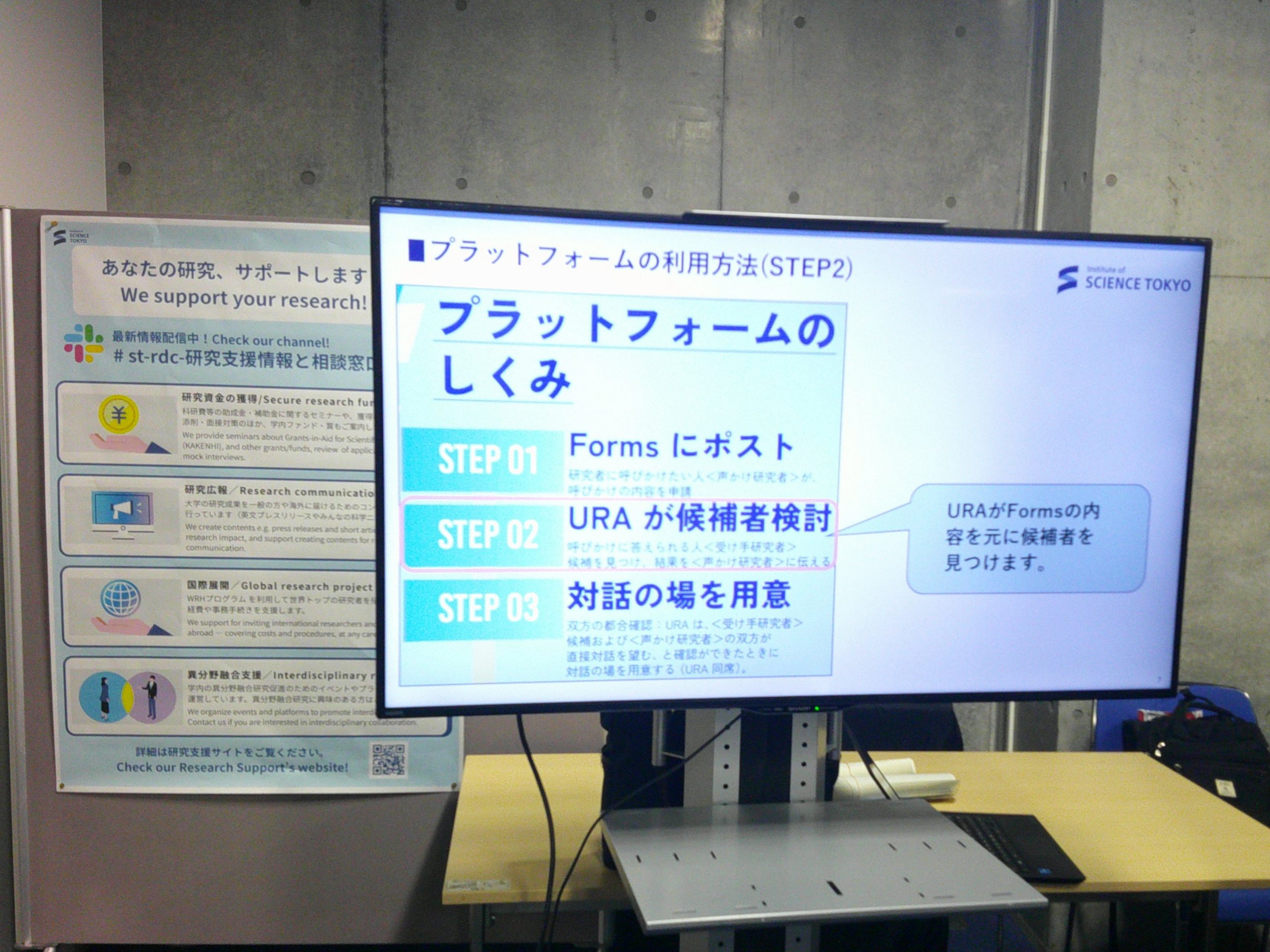
This event gave researchers a valuable opportunity to connect with colleagues from different fields, many for the first time. Going forward, URAs will continue to support interdisciplinary efforts through the Science Crosspoint Platform.